



















































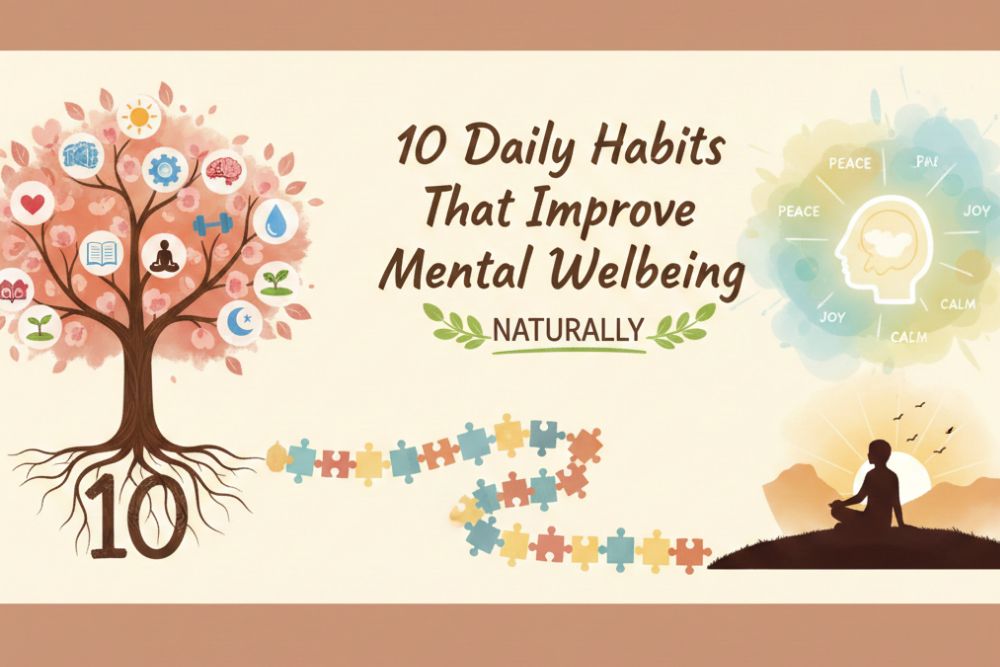



10 Daily Habits That Improve Mental Wellbeing Naturally

Mental wellbeing is not built overnight. Instead, it is shaped by small, consistent habits practiced every day. In today’s fast-paced, always-connected world, stress, anxiety, and emotional exhaustion have become common. However, the good news is that simple daily habits can naturally improve mental wellbeing without medication.
Backed by psychological research and wellness experts, these habits support emotional balance, mental clarity, and long-term resilience.
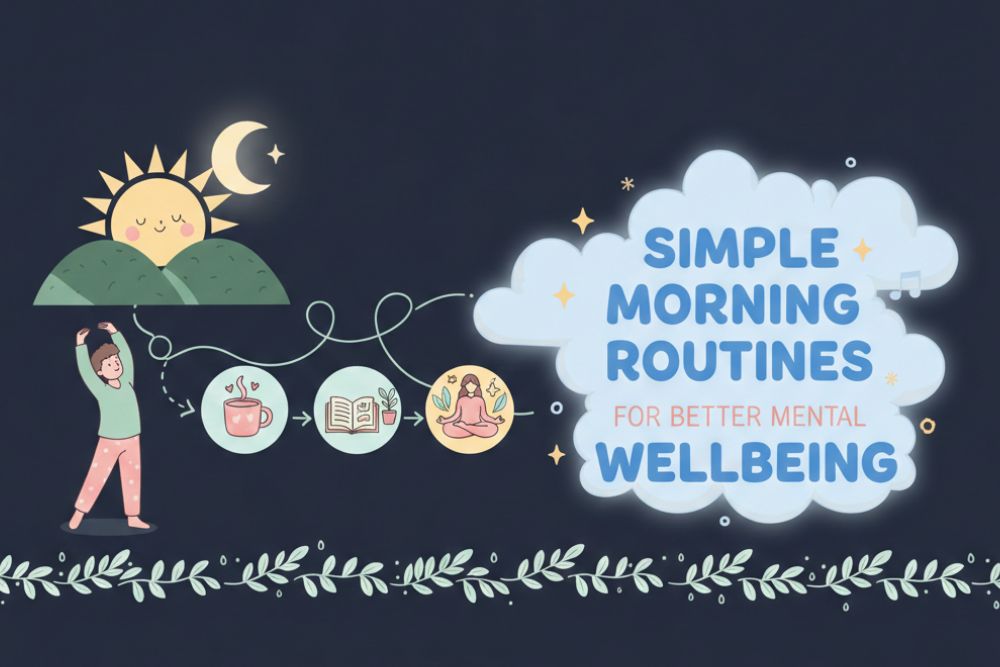
1. Start Your Day with a Calm Morning Routine
How you begin your day sets the tone for your mental wellbeing. Rushing immediately into emails or social media increases stress hormones and mental overload.
What to do instead:
- Wake up at a consistent time
- Spend 5–10 minutes in silence or deep breathing
- Avoid screens for the first 30 minutes
Why it works:
A calm morning reduces cortisol levels and improves focus throughout the day, leading to better emotional regulation.
2. Practice Mindful Breathing or Meditation Daily
Mindfulness is one of the most effective natural tools for improving mental wellbeing.
Simple habit:
- 5–10 minutes of deep breathing or guided meditation
- Focus on the present moment without judgment
Mental wellbeing benefit:
Mindfulness reduces anxiety, improves attention, and enhances emotional awareness, making it easier to handle daily challenges.
3. Move Your Body Every Day
You don’t need intense workouts to support mental wellbeing. Even gentle physical activity can significantly improve mood.
Best options:
- Walking
- Yoga
- Stretching
- Light home workouts
Science-backed benefit:
Physical activity releases endorphins and serotonin—natural chemicals that boost mood and reduce stress.
4. Eat Foods That Support Brain and Emotional Health
Nutrition plays a direct role in mental wellbeing. What you eat affects your brain chemistry and emotional balance.
Include more:
- Leafy greens
- Nuts and seeds
- Fruits
- Omega-3 rich foods
- Whole grains
Limit:
Excess sugar, caffeine, and processed foods, which can increase anxiety and mood swings.
5. Get Quality Sleep, Not Just More Sleep
Poor sleep is closely linked to anxiety, low mood, and poor concentration.
Healthy sleep habits:
- Fixed bedtime and wake-up time
- No screens 1 hour before sleep
- Calm bedtime routine
Mental wellbeing impact:
Quality sleep improves emotional stability, memory, and stress tolerance.
6. Limit Social Media and Digital Overload
Constant notifications and comparisons on social media can silently harm mental wellbeing.
Daily habit:
- Set screen-time limits
- Avoid doom-scrolling
- Take short digital detox breaks
Why this matters:
Reducing digital overload improves self-esteem, focus, and emotional calmness.
7. Practice Gratitude Every Day
Gratitude shifts focus from what’s lacking to what’s meaningful.
Easy practice:
- Write down 3 things you’re grateful for daily
- Reflect on small wins and positive moments
Mental health benefit:
Gratitude improves mood, reduces negative thinking, and strengthens emotional resilience.
8. Stay Connected with Positive People
Human connection is essential for mental wellbeing.
Daily connection ideas:
- Talk to a trusted friend or family member
- Share your feelings openly
- Avoid emotionally draining interactions when possible
Why it helps:
Positive social connections reduce loneliness and increase feelings of belonging and safety.
9. Express Your Thoughts and Emotions
Bottling up emotions can negatively affect mental wellbeing over time.
Healthy expression methods:
- Journaling
- Talking to someone you trust
- Creative outlets like art or music
Emotional benefit:
Expressing emotions helps process stress and improves self-awareness.
10. Be Kind to Yourself
Self-criticism is one of the biggest barriers to mental wellbeing.
Daily self-compassion habit:
- Replace harsh self-talk with supportive language
- Accept imperfections
- Celebrate effort, not just results
Long-term impact:
Self-compassion improves confidence, emotional strength, and overall mental wellness.
How Long Does It Take to See Results?
Most people notice improvements in mental wellbeing within 2–4 weeks of consistent daily habits. Small changes practiced daily are far more effective than occasional big efforts.
When to Seek Professional Support
While daily habits significantly improve mental wellbeing, professional support may be necessary if you experience:
- Persistent anxiety or sadness
- Sleep disturbances
- Loss of interest in daily life
- Difficulty functioning at work or home
Seeking help is a sign of strength, not weakness.
Improving mental wellbeing naturally doesn’t require drastic changes. Instead, it requires consistent, mindful habits that support your emotional and mental health every day.
By practicing these 10 daily habits, you build resilience, clarity, and balance—creating a healthier mind for the long term.