




















































Digital Eye Strain: Symptoms, Causes & Proven Prevention Tips

In today’s digital world, screens are everywhere—from smartphones and laptops to tablets and TVs. As a result, many people experience digital eye strain, also known as computer vision syndrome. While it may seem minor at first, ignoring the symptoms can lead to long-term eye discomfort and reduced productivity.
Let’s explore what digital eye strain is, why it happens, and—most importantly—how you can prevent it.
What Is Digital Eye Strain?
Digital eye strain is a group of eye and vision problems caused by prolonged screen use. Unlike reading printed text, screens force your eyes to work harder due to glare, poor contrast, and continuous focus.
As screen time increases, eye fatigue becomes more common across all age groups.
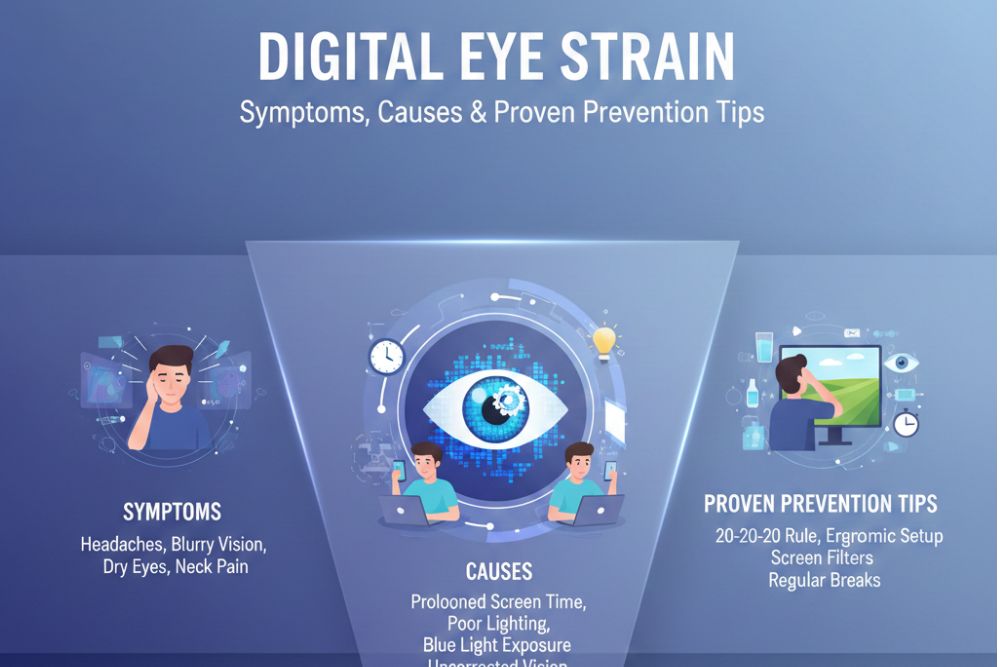
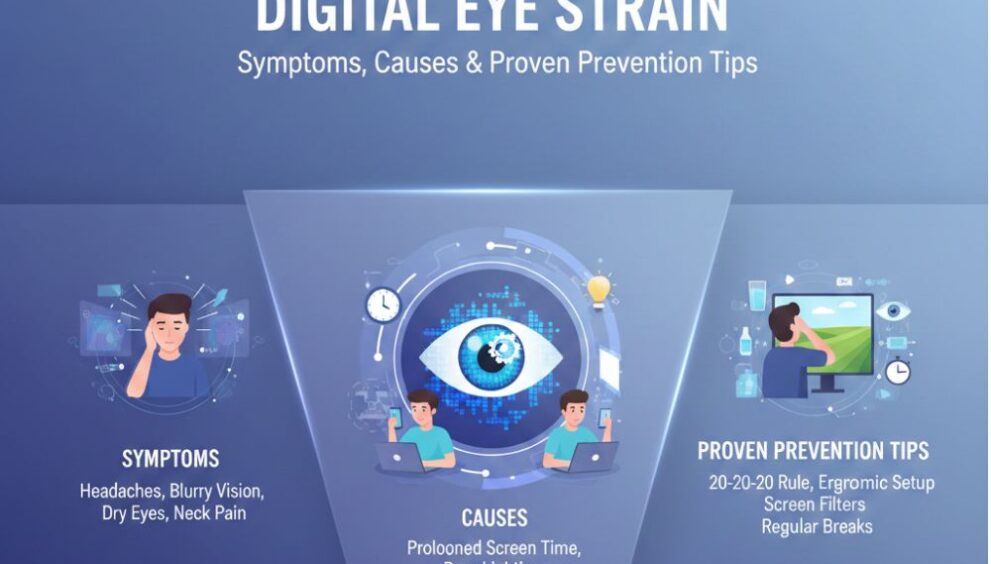
Common Symptoms of Digital Eye Strain
Initially, symptoms may appear mild. However, with continued screen exposure, they often worsen.
Most common symptoms include:
- Eye fatigue and discomfort
- Dry or watery eyes
- Blurred or double vision
- Headaches, especially after screen use
- Burning or itching sensation
- Neck and shoulder pain
If these symptoms persist even after rest, it’s a clear sign your eyes need attention.
Main Causes of Digital Eye Strain
Understanding the causes makes prevention easier. In most cases, digital eye strain results from a combination of habits and environmental factors.
1. Prolonged Screen Time
First and foremost, staring at screens for hours without breaks overworks your eye muscles.
2. Reduced Blinking
Normally, we blink about 15–20 times per minute. However, while using screens, blinking reduces by nearly half—leading to dry eyes.
3. Poor Screen Position
When screens are too close, too high, or improperly angled, the eyes strain to maintain focus.
4. Glare and Improper Lighting
Bright screens, reflections, and overhead lighting increase eye fatigue.
5. Uncorrected Vision Problems
Even minor vision issues, if left uncorrected, can significantly worsen digital eye strain.
Proven Prevention Tips for Digital Eye Strain
Fortunately, digital eye strain is highly preventable. With a few simple changes, you can protect your eyes effectively.
Follow the 20-20-20 Rule
Most importantly, give your eyes regular breaks.
Every 20 minutes, look at something 20 feet away for 20 seconds.
This relaxes eye muscles and reduces fatigue.
Adjust Screen Position and Distance
Proper ergonomics play a major role.
- Keep the screen at arm’s length
- Position it slightly below eye level
- Tilt the screen to reduce glare
As a result, your eyes remain more relaxed.
Reduce Screen Glare
To minimise strain:
- Use anti-glare screen protectors
- Adjust brightness and contrast
- Avoid direct light falling on screens
Soft, ambient lighting works best.
Blink More and Use Artificial Tears
Since blinking reduces during screen use, make a conscious effort to blink.
Additionally, lubricating eye drops can help relieve dryness—especially for those working long hours on screens.
Wear Blue Light Protection Glasses
Blue light from screens disrupts eye comfort and sleep patterns.
Blue light–filtering glasses can:
- Reduce eye strain
- Improve visual comfort
- Support better sleep
They are especially useful for professionals and students.
Keep Your Eyes Healthy with Nutrition
Good eye health starts from within.
Include:
- Leafy greens
- Carrots and sweet potatoes
- Omega-3 rich foods (nuts, fish)
- Vitamin A, C, and E–rich foods
Proper hydration also supports tear production.
Get Regular Eye Check-Ups
Finally, don’t skip professional care.
An eye exam can:
- Detect hidden vision issues
- Ensure correct prescription
- Prevent long-term eye problems
Annual eye check-ups are strongly recommended for frequent screen users.
Digital Eye Strain in Children and Adults
With online learning and remote work on the rise, digital eye strain affects both children and adults. Therefore, limiting screen time, encouraging outdoor activities, and maintaining proper posture are crucial for all age groups.
In conclusion, digital eye strain is a modern lifestyle problem—but it doesn’t have to be permanent. By understanding the symptoms early and adopting proven prevention tips, you can protect your vision and stay comfortable throughout the day.
Small daily habits can make a big difference to your eye health.