














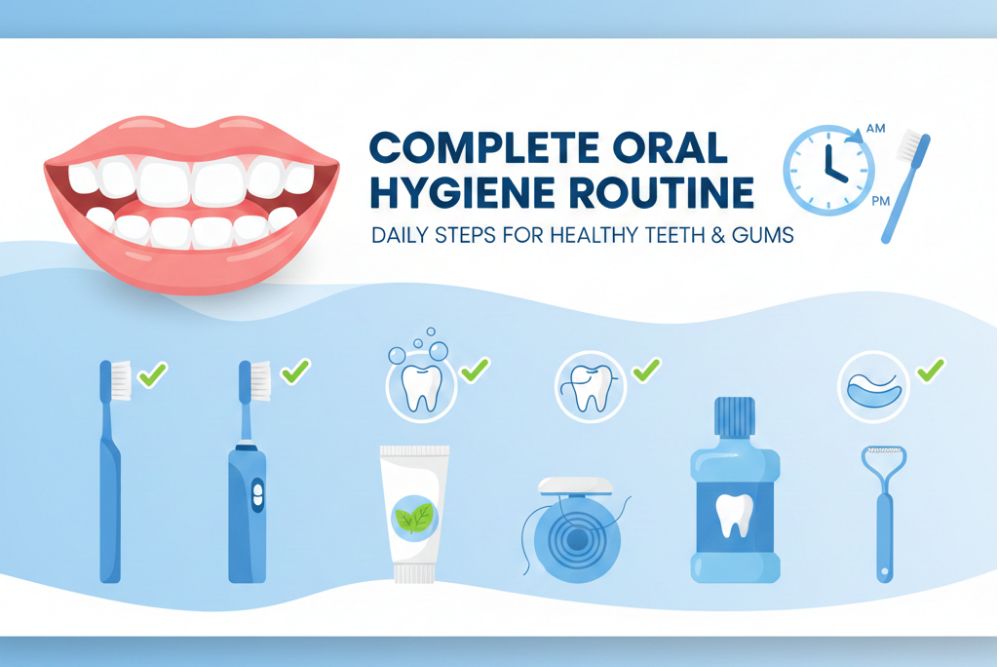


















Complete Oral Hygiene Routine: Daily Steps for Healthy Teeth & Gums

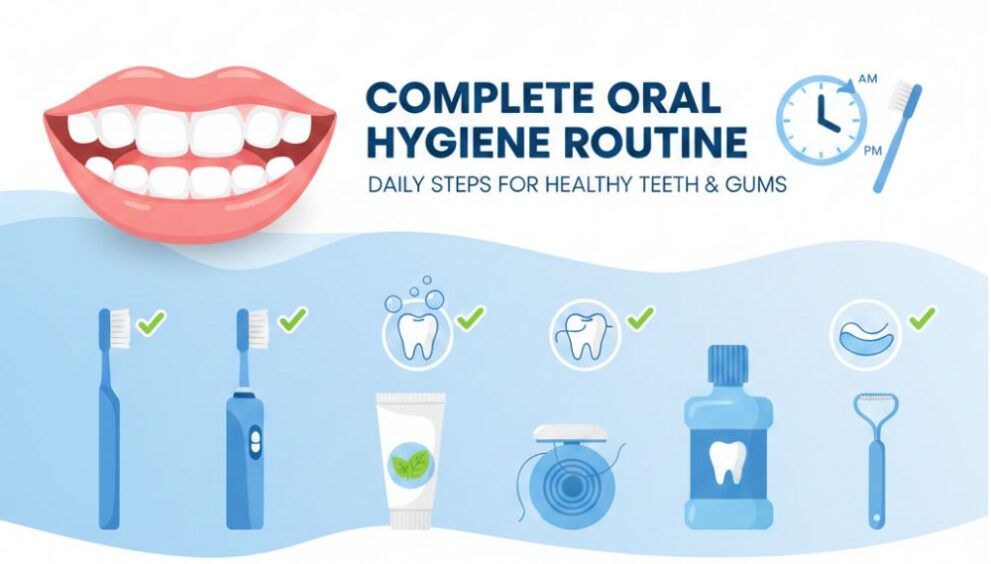
Maintaining good oral hygiene is not just about a bright smile—it’s essential for overall health. A consistent daily oral hygiene routine helps prevent cavities, gum disease, bad breath, and even systemic health issues like heart disease and diabetes. This guide explains step-by-step daily oral care practices recommended by dentists for healthy teeth and gums.
Why a Daily Oral Hygiene Routine Is Important
Poor oral hygiene allows plaque and bacteria to build up, leading to tooth decay, gingivitis, and periodontal disease. Research shows that oral health is closely linked to overall wellness, making preventive dental care a daily necessity—not an occasional task.
Benefits of a proper oral hygiene routine:
- Prevents cavities and gum disease
- Reduces bad breath (halitosis)
- Protects enamel and tooth strength
- Lowers risk of oral infections
- Supports heart and digestive health
Step-by-Step Complete Oral Hygiene Routine
1. Brush Your Teeth Twice a Day (Morning & Night)
Brushing is the foundation of oral care. Brush your teeth at least twice daily for 2 minutes using a soft-bristled toothbrush.
Best practices:
- Use fluoride toothpaste
- Brush gently in circular motions
- Clean all surfaces: front, back, and chewing areas
- Replace your toothbrush every 3 months
Pro tip: Avoid brushing immediately after acidic foods—wait 30 minutes.
2. Use the Correct Brushing Technique
Incorrect brushing can damage enamel and irritate gums.
Dentist-recommended method:
- Hold the toothbrush at a 45-degree angle
- Use short, gentle strokes
- Don’t scrub aggressively
Proper technique is more important than brushing hard.
3. Floss Once Daily to Remove Hidden Plaque
Flossing removes food particles and plaque from areas your toothbrush can’t reach.
Why flossing matters:
- Prevents gum disease
- Reduces risk of cavities between teeth
- Improves gum health
Floss once a day—preferably before bedtime.
4. Clean Your Tongue to Prevent Bad Breath
Bacteria accumulate on the tongue, causing bad breath and oral infections.
How to clean your tongue:
- Use a tongue scraper or toothbrush
- Gently scrape from back to front
- Rinse after cleaning
This simple step significantly improves oral freshness.
5. Rinse with Mouthwash (Optional but Recommended)
An antibacterial mouthwash helps reduce plaque, freshen breath, and strengthen enamel.
Choose a mouthwash that:
- Is alcohol-free
- Contains fluoride
- Targets gum health
Mouthwash should complement brushing and flossing—not replace them.
6. Maintain a Tooth-Friendly Diet
What you eat directly affects oral health.
Foods that promote healthy teeth & gums:
- Dairy products (calcium-rich)
- Crunchy fruits and vegetables
- Nuts and seeds
- Green tea
Limit:
- Sugary snacks
- Carbonated drinks
- Sticky candies
Drink plenty of water to rinse away food particles naturally.
7. Avoid Harmful Oral Habits
Certain habits can harm your teeth and gums over time.
Avoid:
- Smoking or tobacco use
- Nail biting
- Chewing ice
- Using teeth as tools
These habits increase the risk of enamel damage and gum disease.
8. Visit Your Dentist Every 6 Months
Regular dental check-ups are essential—even if your teeth feel fine.
Dental visits help with:
- Early detection of cavities and gum disease
- Professional cleaning
- Oral cancer screening
Preventive care saves time, money, and discomfort.
Common Oral Hygiene Mistakes to Avoid
- Brushing too hard
- Skipping flossing
- Using worn-out toothbrushes
- Ignoring bleeding gums
- Avoiding dental visits
Correcting these mistakes can dramatically improve oral health.
Build a Consistent Oral Care Habit
A complete oral hygiene routine doesn’t require expensive treatments—just consistency and correct techniques. By following these daily steps, you can maintain healthy teeth, strong gums, and long-term oral wellness.
Healthy teeth are a lifetime investment—start today.