























How Poor Sleep Affects Your Mental Health And How to Fix It

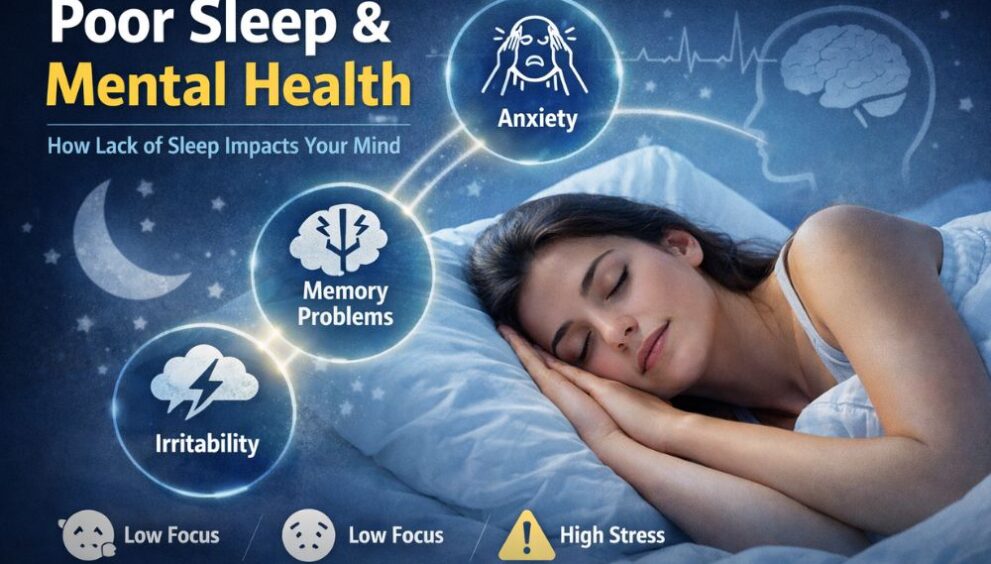
Sleep is not a luxury — it is a biological necessity. Yet in today’s fast-paced world, many people sacrifice sleep due to work stress, screen time, or irregular routines.
What most people don’t realize is that poor sleep directly affects mental health.
Let’s understand how sleep and mental wellbeing are connected — and what you can do to improve both.
Why Sleep Is Important for Mental Health
During sleep, your brain:
- Processes emotions
- Consolidates memories
- Repairs neural pathways
- Regulates stress hormones
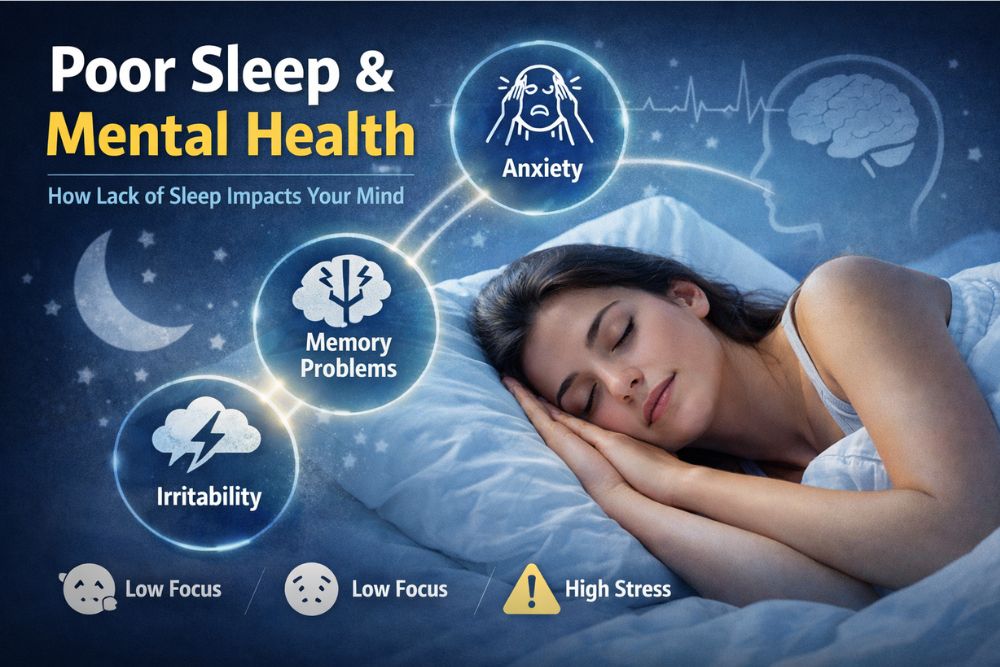
When you don’t get enough rest, these processes get disrupted — leading to mood swings, anxiety, and difficulty concentrating.
How Poor Sleep Impacts Your Mind
1. Increases Anxiety Levels
Lack of sleep raises cortisol (stress hormone) levels. As a result, you may feel more nervous, restless, or overwhelmed.
Even one night of poor sleep can increase anxiety symptoms.
2. Worsens Depression
Sleep disturbances are strongly linked to depression. In fact, insomnia is often one of the earliest signs of depressive disorders.
Poor sleep:
- Reduces serotonin balance
- Lowers emotional resilience
- Makes negative thoughts stronger
3. Affects Memory & Focus
When sleep is insufficient:
- Concentration decreases
- Decision-making becomes difficult
- Reaction time slows
This can affect productivity at work or school.
4. Triggers Mood Swings
Have you noticed feeling irritable after a sleepless night?
That’s because the brain’s emotional regulation center becomes overactive without proper rest.
You may:
- Overreact to small problems
- Feel easily frustrated
- Experience emotional instability
5. Weakens Stress Tolerance
Chronic sleep deprivation makes everyday challenges feel much bigger than they are.
Your coping ability reduces significantly.
How Much Sleep Do You Actually Need?
General recommendations:
- Adults: 7–9 hours per night
- Teenagers: 8–10 hours
- Children: 9–12 hours
Quality of sleep matters just as much as quantity.
Signs You’re Not Getting Enough Sleep
- Feeling tired even after waking up
- Frequent headaches
- Difficulty focusing
- Low motivation
- Increased emotional sensitivity
- Dependence on caffeine
If these signs persist, it may be time to improve your sleep routine.
Simple Ways to Improve Sleep Quality
1. Maintain a Fixed Sleep Schedule
Go to bed and wake up at the same time every day — even on weekends.
Consistency trains your body clock.
2. Reduce Screen Time Before Bed
Blue light from phones and laptops suppresses melatonin (sleep hormone).
Avoid screens at least 1 hour before bedtime.
3. Create a Relaxing Night Routine
Try:
- Light stretching
- Deep breathing
- Reading a book
- Warm shower
Calming activities signal your brain that it’s time to rest.
4. Limit Caffeine & Heavy Meals at Night
Avoid caffeine 6 hours before sleep.
Keep dinner light and easy to digest.
5. Make Your Bedroom Sleep-Friendly
- Keep it dark and quiet
- Maintain comfortable temperature
- Use supportive mattress and pillows
Your environment directly affects sleep quality.
When to Seek Medical Help
Consult a healthcare professional if you experience:
- Chronic insomnia (more than 3 weeks)
- Frequent nightmares
- Snoring with breathing pauses
- Severe daytime fatigue
Underlying conditions like sleep apnea or anxiety disorders may require treatment.
Final Thoughts
Sleep and mental health are deeply connected. Improving your sleep is one of the most powerful — and natural — ways to support emotional wellbeing.
Instead of seeing sleep as “extra time,” consider it an investment in:
✔ Better mood
✔ Stronger focus
✔ Lower stress
✔ Improved overall health
Remember — a well-rested mind is a healthier mind.