Introduction
Infectious diseases are illnesses caused by harmful microorganisms such as bacteria, viruses, fungi, and parasites. These diseases can spread from person to person, through contaminated food or water, insect bites, or contact with infected surfaces. Understanding common infectious diseases and their prevention methods is essential for maintaining good health.
Common Types of Infectious Diseases
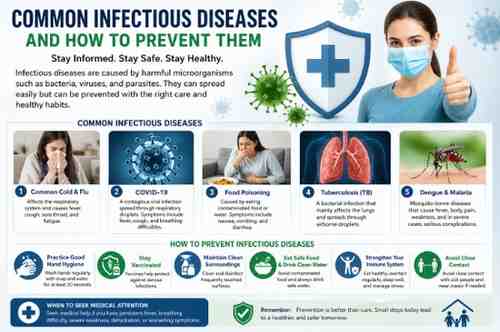
1. Common Cold and Flu
Viral infections that affect the respiratory system, causing symptoms like fever, cough, sore throat, and fatigue.
2. COVID-19
A contagious viral infection that spreads through respiratory droplets and may cause fever, breathing difficulties, and body aches.
3. Food Poisoning
Caused by consuming contaminated food or water, leading to nausea, vomiting, stomach pain, and diarrhea.
4. Tuberculosis (TB)
A bacterial infection that mainly affects the lungs and spreads through airborne droplets.
5. Dengue and Malaria
Mosquito-borne diseases common in tropical regions, causing fever, body pain, weakness, and other complications.
How to Prevent Infectious Diseases
Practice Good Hand Hygiene
Wash your hands regularly with soap and water, especially before eating and after using the restroom.
Stay Vaccinated
Vaccines help protect against serious infections and reduce disease spread.
Maintain Clean Surroundings
Disinfect commonly touched surfaces and keep your environment hygienic.
Eat Safe Food and Drink Clean Water
Avoid contaminated food and ensure proper cooking and storage.
Strengthen Your Immune System
Eat a balanced diet, exercise regularly, sleep well, and manage stress.
Avoid Close Contact with Sick Individuals
Wear masks when necessary and maintain distance during outbreaks.
When to Seek Medical Attention
Consult a healthcare professional if you experience persistent fever, breathing difficulty, severe weakness, dehydration, or worsening symptoms.
Conclusion
Prevention is the best defense against infectious diseases. By practicing hygiene, staying vaccinated, and maintaining a healthy lifestyle, you can protect yourself and your family from common infections and stay healthy year-round.