
































Viral vs. Bacterial Infections: Key Differences Parents Should Know

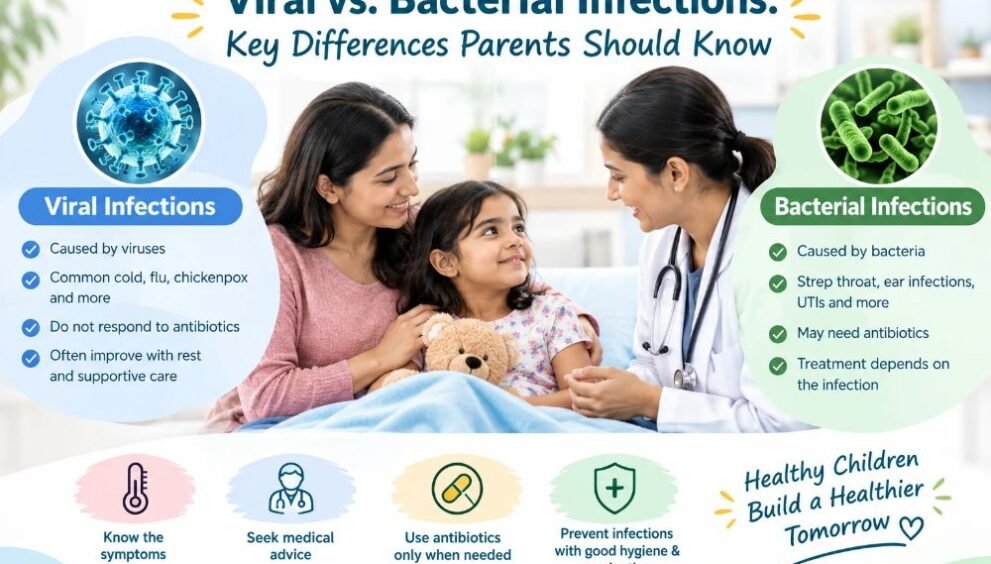
Children often experience infections that cause fever, cough, sore throat, runny nose, or stomach discomfort. However, not all infections have the same cause. Some are caused by viruses, while others are caused by bacteria. Understanding the difference between viral and bacterial infections can help parents make informed decisions about their child’s health and know when to seek medical attention.
Although these infections may cause similar symptoms, they differ in how they spread, how they affect the body, and how they are treated. Most importantly, antibiotics work against certain bacterial infections but do not treat viral infections.
What Is a Viral Infection?
A viral infection occurs when a virus enters the body and uses the body’s cells to multiply. Viruses can affect the respiratory system, digestive system, skin, and other parts of the body.
Common viral infections in children include:
- Common cold
- Influenza (flu)
- COVID-19
- Chickenpox
- Hand, foot and mouth disease
- Viral gastroenteritis
Viral infections often spread through respiratory droplets, close contact, contaminated surfaces, or infected food and water, depending on the virus.
Many mild viral infections improve with rest, fluids, and appropriate symptom management. However, some viral infections can cause serious illness and may require medical treatment.
What Is a Bacterial Infection?
A bacterial infection develops when harmful bacteria enter the body, multiply, and cause illness. While many bacteria are harmless or beneficial, some can cause infections that require medical care.
Common bacterial infections in children include:
- Strep throat
- Certain ear infections
- Urinary tract infections (UTIs)
- Some cases of bacterial pneumonia
- Impetigo, a bacterial skin infection
- Certain bacterial intestinal infections
Bacterial infections may spread through respiratory droplets, direct contact, contaminated food or water, or bacteria entering the urinary tract or damaged skin. The transmission method depends on the organism responsible.
Some bacterial infections resolve without antibiotics, while others require prompt treatment. A healthcare professional determines the appropriate treatment based on the infection and the child’s condition.
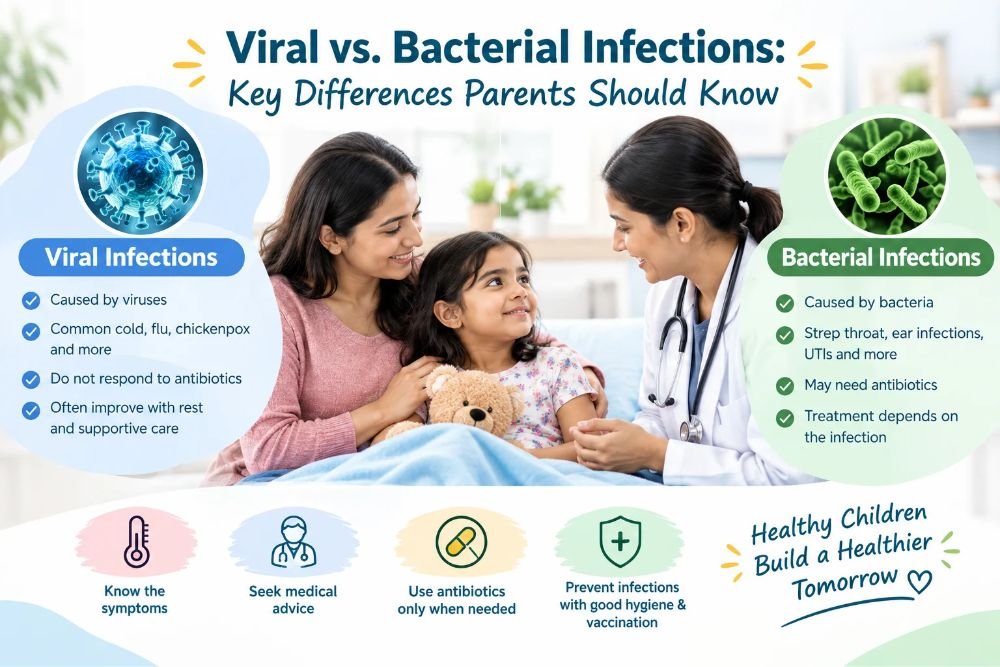
Viral vs. Bacterial Infections: Key Differences
Understanding the differences between viral and bacterial infections can help parents know what to expect and when to seek care.
| Feature | Viral Infections | Bacterial Infections |
|---|---|---|
| Cause | Viruses | Bacteria |
| Common examples | Common cold, flu, chickenpox | Strep throat, some UTIs, impetigo |
| Symptoms | May include cough, runny nose, fever, and body aches | May include fever, localized pain, swelling, or pus |
| Treatment | Usually supportive care; specific antiviral medicines for certain infections | Antibiotics for infections where they are indicated |
| Antibiotics | Do not work against viruses | May be effective when the bacteria are susceptible |
| Recovery | Many mild infections improve on their own | Recovery depends on the infection and whether specific treatment is needed |
Important: Symptoms alone cannot reliably distinguish a viral infection from a bacterial infection. Some viral infections cause high fever, and some bacterial infections cause mild symptoms. Medical assessment and, when appropriate, laboratory tests help identify the cause.
Symptoms Parents Should Watch For
Viral and bacterial infections can share many symptoms. Parents should observe the child’s overall condition, the duration of symptoms, and whether the illness is improving or worsening.
Common Symptoms of Viral Infections
- Runny or blocked nose
- Cough and sneezing
- Fever and body aches
- Sore throat
- Tiredness and reduced appetite
- Vomiting or diarrhea in some infections
Possible Signs of Bacterial Infections
- Persistent or worsening fever
- Severe or localized pain
- Painful urination
- Redness, warmth, swelling, or pus around a skin wound
- Severe sore throat with fever and swollen neck glands
These symptoms do not confirm a bacterial infection. For example, sore throat and fever can occur with both viral illnesses and strep throat. A clinician may recommend a throat test, urine test, or other investigations depending on the symptoms.
How Are Viral and Bacterial Infections Treated?
Treatment for Viral Infections
Most uncomplicated viral infections are managed with supportive care, which may include:
- Encouraging adequate rest.
- Offering fluids frequently to prevent dehydration.
- Providing age-appropriate food as tolerated.
- Using fever-relieving medicines only as advised by a healthcare professional or according to appropriate product instructions.
- Monitoring symptoms and the child’s general condition.
Antiviral medicines are available for certain viral infections, such as influenza, and may be recommended depending on the child’s age, risk factors, and how long symptoms have been present.
Never give aspirin to children unless specifically directed by a specialist.
Treatment for Bacterial Infections
When a bacterial infection requires antibiotics, a healthcare professional selects the appropriate medicine based on the suspected or confirmed organism, the child’s age, allergies, and other medical factors.
Parents should:
- Give prescribed antibiotics exactly as directed.
- Follow the healthcare professional’s instructions about the duration of treatment.
- Never use leftover antibiotics or share medicines with another person.
- Avoid stopping or changing treatment without medical advice.
- Seek reassessment if the child worsens or does not improve as expected.
Unnecessary antibiotic use can cause side effects and contribute to antibiotic resistance, making some bacterial infections harder to treat.
When Should Parents Take Their Child to a Doctor?
Consult a healthcare professional if your child has persistent fever, worsening symptoms, severe pain, repeated vomiting, reduced urination, or symptoms that concern you.
Seek urgent medical attention if your child experiences difficulty breathing, blue or grey lips, unusual confusion, difficulty waking, a seizure, severe dehydration, or a rash that does not fade when pressed.
A baby younger than three months with a temperature of 38°C (100.4°F) or higher needs urgent medical assessment.
Do not wait for symptoms to become severe if your child appears seriously unwell.
How Can Parents Prevent Infections in Children?
Simple everyday habits can help reduce the risk of many infections:
- Encourage handwashing: Teach children to wash their hands with soap and water, especially before eating and after using the toilet.
- Keep vaccinations up to date: Follow the recommended immunization schedule for your child.
- Practice respiratory hygiene: Encourage children to cover coughs and sneezes and dispose of tissues properly.
- Maintain food safety: Cook food thoroughly, use safe drinking water, and store food correctly.
- Avoid sharing personal items: Do not share drinking bottles, utensils, or towels when someone is unwell.
- Keep sick children home when necessary: Follow medical advice and school guidance to reduce the spread of infection.
- Support general health: Provide balanced meals, adequate sleep, and regular physical activity appropriate for the child’s age.
Frequently Asked Questions (FAQs)
How can I tell whether my child’s infection is viral or bacterial?
Symptoms alone cannot reliably identify the cause. A healthcare professional may assess your child’s symptoms, examine them, and recommend testing when necessary.
Do antibiotics treat viral infections?
No. Antibiotics work against susceptible bacteria, not viruses. They do not treat the common cold, flu, or other viral infections. Antibiotics should only be used when prescribed for an appropriate indication.
Can a viral infection turn into a bacterial infection?
A viral infection can sometimes be followed by a secondary bacterial infection. For example, certain children may develop a bacterial ear infection or pneumonia after a viral respiratory illness. Worsening symptoms or new symptoms after initial improvement should be assessed by a healthcare professional.
Is a high fever always a sign of bacterial infection?
No. Both viral and bacterial infections can cause high fever. A child’s age, behavior, breathing, hydration, and other symptoms are important when deciding how urgently medical care is needed.
When should I worry about a fever in my child?
Seek urgent assessment for a baby younger than three months with a temperature of 38°C (100.4°F) or higher. For children of any age, difficulty breathing, unusual drowsiness, seizures, severe dehydration, or other serious symptoms require urgent medical attention.
Conclusion
Viral and bacterial infections can cause similar symptoms, but they have different causes and may require different treatments. Many mild viral illnesses improve with supportive care, while certain bacterial infections need antibiotics or other specific treatment.
Parents should avoid self-diagnosing infections or giving antibiotics without medical advice. Recognizing warning signs, maintaining good hygiene, keeping vaccinations up to date, and seeking timely medical care can help protect children’s health.
Medical disclaimer: This article is for educational purposes only and does not replace professional medical advice, diagnosis, or treatment. Consult a qualified healthcare professional if you have concerns about your child’s symptoms.