




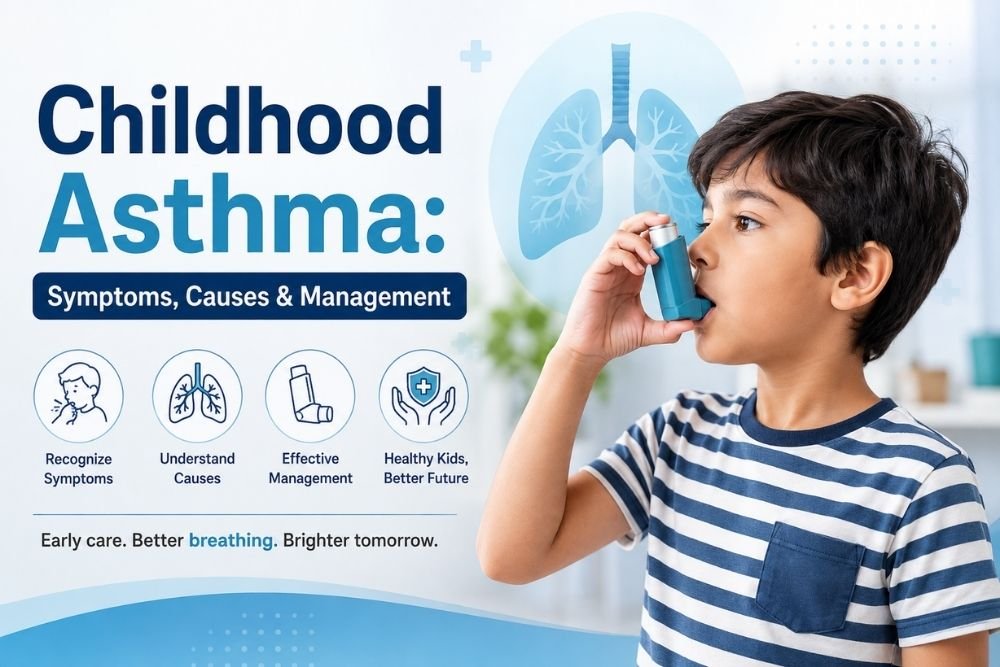













































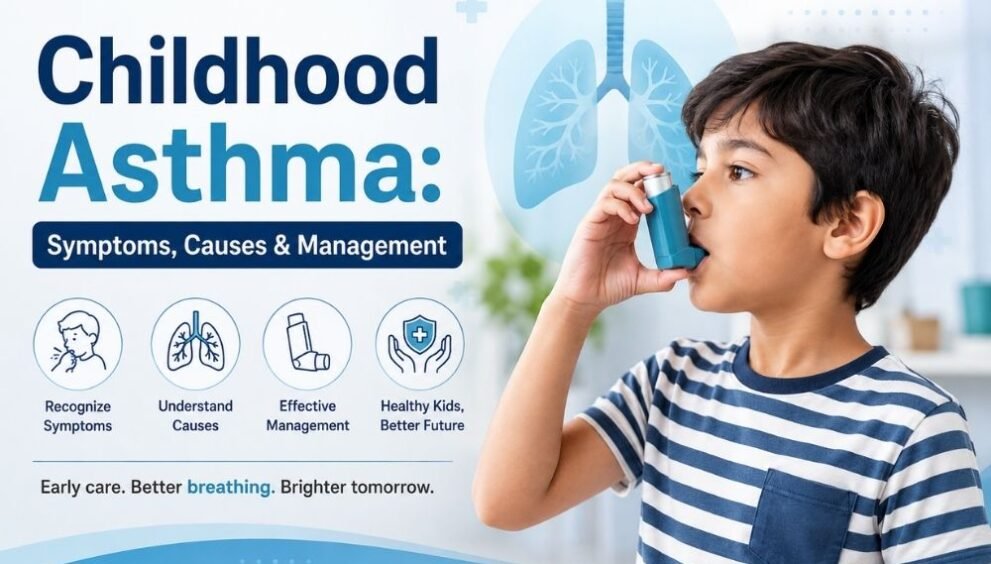
Childhood Asthma: Symptoms, Causes & Management

Introduction
Childhood asthma is a common condition that affects the airways and can make it difficult for children to breathe. Asthma symptoms may come and go and can be triggered by factors such as allergies, respiratory infections, exercise, weather changes, or smoke.
With proper diagnosis, treatment, and regular medical care, most children with asthma can participate in normal daily activities and stay active.
What Is Childhood Asthma?
Asthma is a long-term condition in which the airways become inflamed and more sensitive. During an asthma episode, the airways can narrow and produce extra mucus, making it harder for air to move in and out of the lungs.
Asthma can affect children of different ages, and symptoms may vary from child to child.
Common Symptoms of Childhood Asthma
Recognizing asthma symptoms early can help parents seek appropriate medical care.
Common symptoms include:
- Frequent coughing, especially at night
- Wheezing or a whistling sound while breathing
- Shortness of breath
- Chest tightness
- Difficulty breathing during physical activity
- Coughing or breathing problems that worsen during colds
Some children may have symptoms only occasionally, while others may experience them more frequently.
Causes and Triggers of Childhood Asthma
The exact cause of asthma is not always clear. Genetics and environmental factors can both play a role.
Common asthma triggers include:
1. Allergens
Dust mites, pollen, mold, pet dander, and other allergens may trigger symptoms in some children.
2. Respiratory Infections
Colds and other viral respiratory infections can worsen asthma symptoms.
3. Smoke and Air Pollution
Cigarette smoke, strong fumes, and polluted air can irritate the airways and trigger symptoms.
4. Exercise
Physical activity can sometimes cause asthma symptoms. However, children with well-controlled asthma can usually participate in sports and exercise with appropriate medical guidance.
5. Weather Changes
Cold air or sudden changes in temperature may trigger symptoms in some children.
6. Strong Odors
Perfumes, cleaning products, sprays, and other strong smells may irritate sensitive airways.
How Is Childhood Asthma Diagnosed?
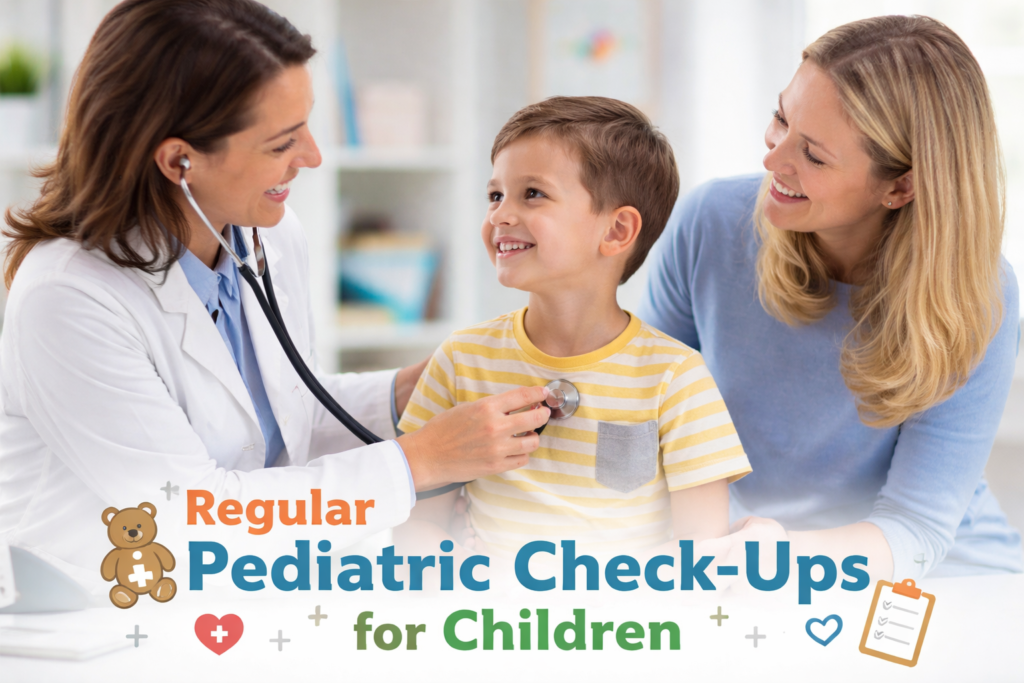
A pediatrician will usually ask about the child’s symptoms, medical history, family history, and possible triggers.
Depending on the child’s age and symptoms, the doctor may recommend breathing tests or other evaluations.
Because coughing and wheezing can have many causes, proper medical assessment is important before assuming that a child has asthma.
Management of Childhood Asthma
There is currently no cure for asthma, but it can often be effectively controlled with the right treatment plan.
Follow the Doctor’s Treatment Plan
A pediatrician may recommend medications such as inhaled medicines depending on the child’s symptoms and asthma severity.
Parents should follow the prescribed dosage and instructions carefully.
Identify and Reduce Triggers
Try to identify factors that worsen your child’s symptoms and reduce exposure when possible.
For example:
- Keep indoor spaces free from excessive dust.
- Avoid cigarette smoke around children.
- Reduce exposure to known allergens.
- Keep the child’s environment well ventilated.
Learn Proper Inhaler Technique
If an inhaler is prescribed, make sure your child uses it correctly. Some children may need a spacer device to help deliver inhaled medicine effectively.
Ask your pediatrician or healthcare professional to demonstrate the correct technique.
Encourage Normal Physical Activity
Children with asthma should not automatically avoid exercise. With appropriate asthma management, many children can safely enjoy sports and other physical activities.
When Is Asthma an Emergency?
Seek urgent medical attention if a child has severe difficulty breathing, is struggling to speak or walk because of breathlessness, develops bluish or gray lips/face, becomes unusually drowsy or confused, or does not improve with their prescribed rescue treatment.
Parents should follow the child’s asthma action plan if one has been provided by their healthcare professional.
Tips for Parents
Parents can support children with asthma by:
- Keeping prescribed medicines available.
- Understanding the child’s asthma action plan.
- Recognizing early warning signs.
- Tracking symptoms and possible triggers.
- Informing teachers or caregivers about the child’s asthma.
- Attending regular medical follow-ups.
- Avoiding exposure to tobacco smoke.
Conclusion
Childhood asthma can usually be managed effectively with proper medical care and a personalized treatment plan. Understanding symptoms, identifying triggers, using prescribed medicines correctly, and attending regular pediatric checkups can help children stay healthy and active.
If your child frequently coughs, wheezes, experiences shortness of breath, or has repeated breathing problems, consult a pediatrician for proper evaluation and guidance.