
















































Hypothyroidism vs. Hyperthyroidism: Symptoms and Causes

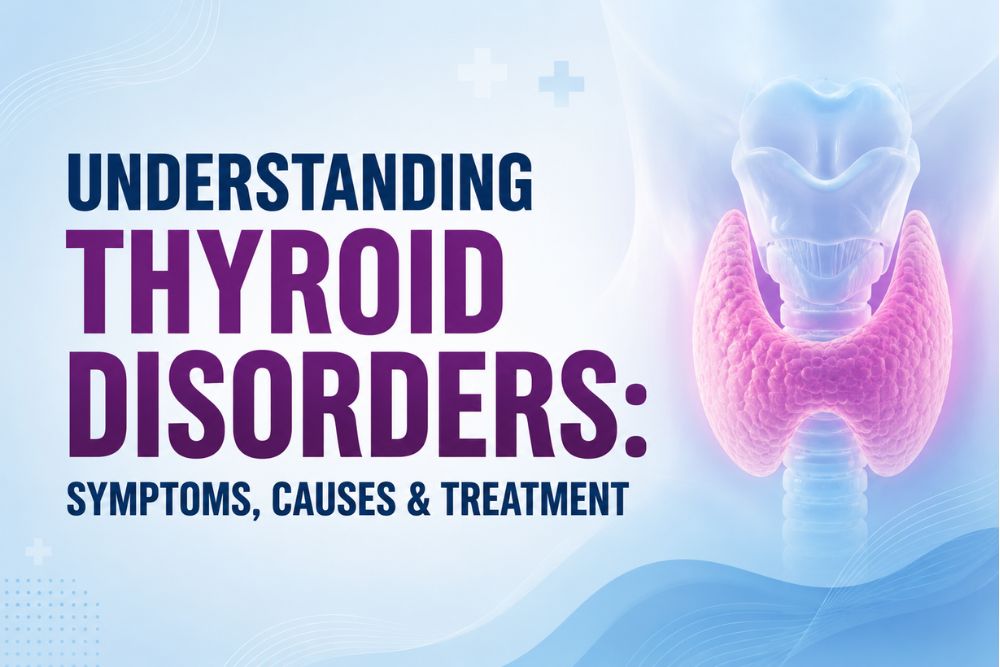
The thyroid is a small, butterfly-shaped gland located at the front of the neck. It produces thyroid hormones that help regulate metabolism, energy levels, body temperature, heart rate, and several other body functions. When the thyroid produces too little or too much hormone, it can lead to a thyroid disorder.
Hypothyroidism and hyperthyroidism are two common thyroid conditions, but they affect the body in opposite ways. Understanding their symptoms, causes, and differences can help you recognize when it may be time to seek medical advice.
What Is Hypothyroidism?
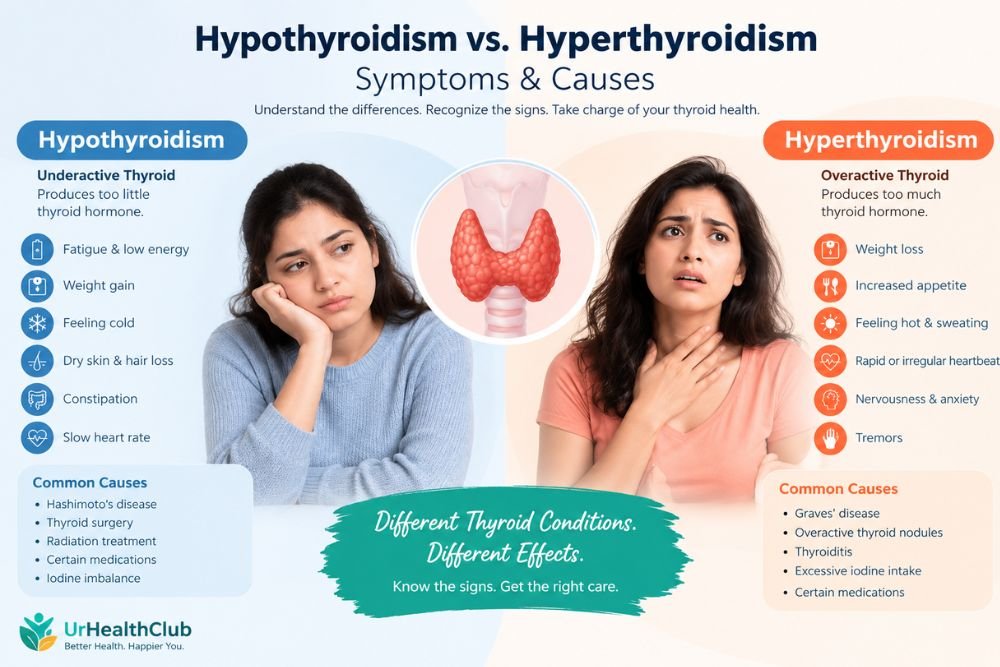
Hypothyroidism, also called an underactive thyroid, occurs when the thyroid gland does not produce enough thyroid hormones. As thyroid hormone levels decrease, many processes in the body slow down.
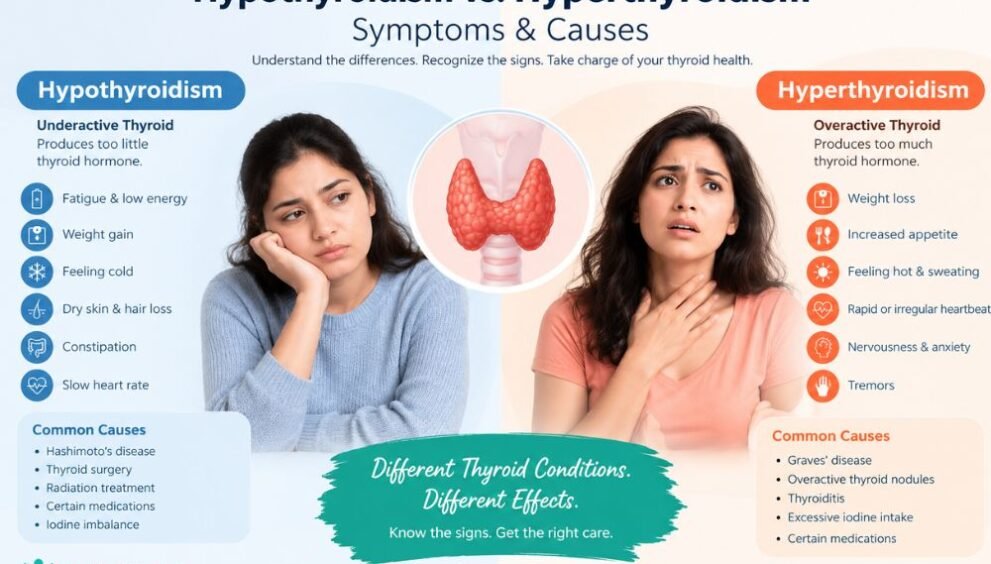
Common symptoms of hypothyroidism include:
- Persistent tiredness or low energy
- Unexplained weight gain
- Increased sensitivity to cold
- Dry skin and thinning hair
- Constipation
- Muscle or joint pain
- Slow heart rate
- Difficulty concentrating
- Depression or low mood
- Heavy or irregular menstrual periods
Symptoms can develop gradually, so some people may not immediately realize that their thyroid is underactive.
Causes of Hypothyroidism
One of the most common causes of hypothyroidism is Hashimoto’s disease, an autoimmune condition in which the immune system attacks the thyroid gland. Other possible causes include thyroid inflammation, thyroid surgery, radiation treatment, certain medications, and, in some cases, problems affecting the pituitary gland. Too much or too little iodine can also affect thyroid function in certain situations.
What Is Hyperthyroidism?
Hyperthyroidism, also known as an overactive thyroid, occurs when the thyroid gland produces more thyroid hormones than the body needs. This can cause many body functions to speed up.
Common symptoms of hyperthyroidism include:
- Unintentional weight loss
- Increased appetite
- Fast or irregular heartbeat
- Nervousness or irritability
- Difficulty sleeping
- Excessive sweating
- Increased sensitivity to heat
- Shaky hands
- Muscle weakness
- Frequent bowel movements
- Menstrual changes
- Swelling in the neck caused by an enlarged thyroid
Not everyone experiences the same symptoms, and their severity can vary from person to person.
Causes of Hyperthyroidism
Graves’ disease is a common cause of hyperthyroidism. It is an autoimmune condition in which antibodies stimulate the thyroid to produce excessive amounts of thyroid hormone. Other causes include overactive thyroid nodules, thyroiditis, excessive iodine exposure, and taking too much thyroid hormone medication. Rarely, certain pituitary disorders can also contribute to hyperthyroidism.
Hypothyroidism vs. Hyperthyroidism: Key Differences
| Feature | Hypothyroidism | Hyperthyroidism |
|---|---|---|
| Thyroid activity | Underactive | Overactive |
| Hormone production | Too little | Too much |
| Weight changes | Weight gain may occur | Weight loss may occur |
| Temperature | Increased sensitivity to cold | Increased sensitivity to heat |
| Heart rate | May be slower | May be faster or irregular |
| Energy | Fatigue and low energy | Restlessness or difficulty sleeping |
| Bowel movements | Constipation | More frequent bowel movements |
| Common autoimmune cause | Hashimoto’s disease | Graves’ disease |
How Are Thyroid Disorders Diagnosed?
Symptoms alone cannot confirm whether someone has hypothyroidism or hyperthyroidism because similar symptoms can occur with other health conditions. Healthcare professionals commonly use blood tests to evaluate thyroid function.
A TSH test is often used as an initial test. Doctors may also check T4, T3, and thyroid antibody levels, depending on the symptoms and suspected cause. Additional tests or imaging may sometimes be needed.
When Should You See a Doctor?
Persistent unexplained weight changes, extreme tiredness, unusual sensitivity to cold or heat, changes in heart rate, menstrual changes, or swelling in the neck should be discussed with a healthcare professional. Early evaluation can help identify thyroid problems and determine appropriate treatment.
Frequently Asked Questions
Q. Can hypothyroidism and hyperthyroidism have similar symptoms?
Yes. Both can sometimes cause fatigue, mood changes, menstrual changes, and other nonspecific symptoms. Testing is needed to determine the cause.
Q. Which is more common: hypothyroidism or hyperthyroidism?
Both conditions occur in the population, but hypothyroidism is generally more common than hyperthyroidism. Individual risk varies based on factors such as age, sex, family history, and autoimmune conditions.
Q. Can thyroid disorders be treated?
Yes. Treatment depends on the specific thyroid disorder, its cause, severity, and the person’s overall health. A healthcare professional can recommend the appropriate treatment and monitoring plan.
Hypothyroidism means the thyroid is producing too little hormone, while hyperthyroidism means it is producing too much. Recognizing the differences in symptoms and causes can help people seek appropriate medical evaluation when needed.