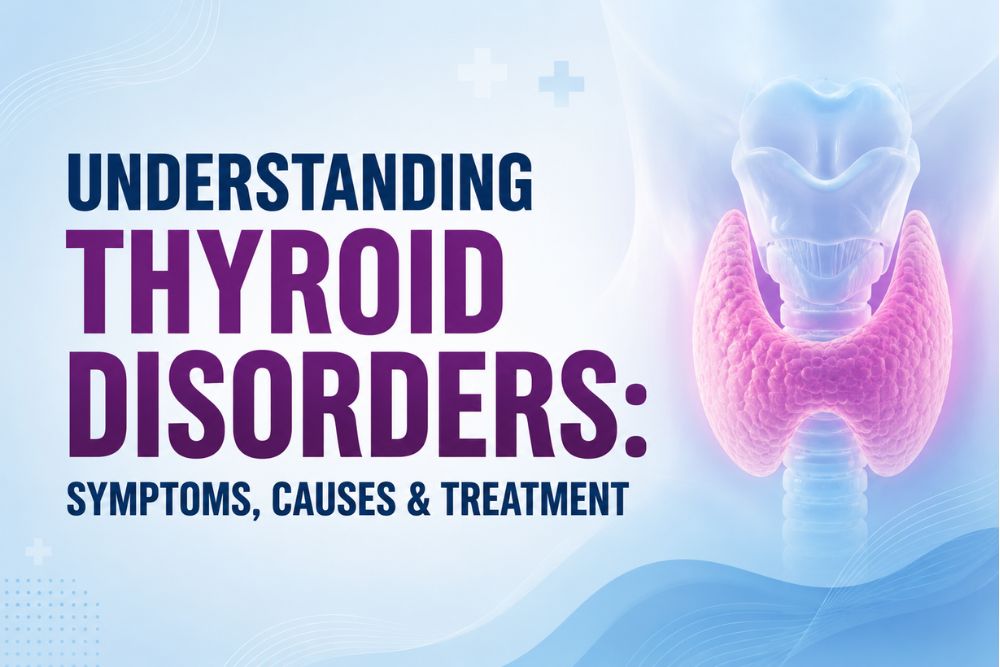
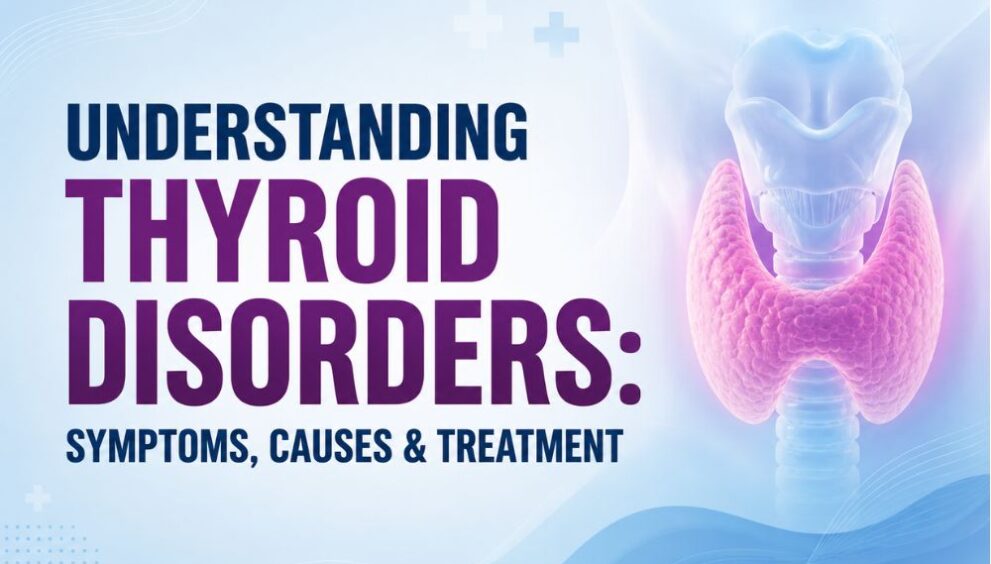
Understanding Thyroid Disorders: Symptoms, Causes & Treatment
A Complete Guide to Thyroid Health and Hormonal Balance
The thyroid gland plays a vital role in regulating many functions in the body, including metabolism, energy levels, heart rate, and body temperature. When the thyroid does not function properly, it can lead to thyroid disorders that affect overall health and daily life. Understanding thyroid disorders, their symptoms, causes, and treatment options can help in early diagnosis and effective management.
What Are Thyroid Disorders?
Thyroid disorders are medical conditions that affect the normal functioning of the thyroid gland, a small butterfly-shaped gland located in the front of the neck. The thyroid produces hormones that help control the body’s metabolism and energy use.
The two most common thyroid disorders are:
- Hypothyroidism – Underactive thyroid gland producing too little hormone
- Hyperthyroidism – Overactive thyroid gland producing excess hormone
Both conditions can impact physical, mental, and emotional health.
Common Symptoms of Thyroid Disorders
Thyroid disorder symptoms may vary depending on whether the thyroid is overactive or underactive.
Symptoms of Hypothyroidism (Underactive Thyroid)
- Fatigue and low energy
- Weight gain
- Dry skin and hair loss
- Depression or mood changes
- Sensitivity to cold
- Slow heart rate
- Constipation
- Difficulty concentrating
Symptoms of Hyperthyroidism (Overactive Thyroid)
- Unexplained weight loss
- Increased appetite
- Rapid heartbeat
- Anxiety or nervousness
- Excessive sweating
- Tremors or shaky hands
- Difficulty sleeping
- Heat intolerance
If you experience persistent symptoms, consulting a healthcare professional is important.
Causes of Thyroid Disorders
Several factors can contribute to thyroid problems.
1. Autoimmune Conditions
Autoimmune diseases are a common cause of thyroid disorders.
Examples include:
- Hashimoto’s Thyroiditis – Often linked to hypothyroidism
- Graves’ Disease – Commonly associated with hyperthyroidism
2. Iodine Imbalance
The thyroid gland requires iodine to produce hormones. Too little or too much iodine may affect thyroid function.
3. Genetics and Family History
People with a family history of thyroid disease may have a higher risk of developing thyroid disorders.
4. Hormonal Changes
Hormonal changes during pregnancy, menopause, or aging can influence thyroid health.
5. Certain Medications and Medical Treatments
Some medications, radiation therapy, or medical conditions can impact thyroid hormone production.
How Thyroid Disorders Are Diagnosed
Doctors use several methods to diagnose thyroid conditions, including:
- Physical examination
- Blood tests for thyroid hormone levels
- Thyroid function tests (TSH, T3, T4)
- Ultrasound or imaging tests when necessary
Early diagnosis helps prevent complications and supports better treatment outcomes.
Treatment Options for Thyroid Disorders
Treatment depends on the type and severity of the thyroid condition.
Treatment for Hypothyroidism
Hypothyroidism is often treated with thyroid hormone replacement medication to restore normal hormone levels.
Treatment for Hyperthyroidism
Treatment options may include:
- Anti-thyroid medications
- Radioactive iodine therapy
- Beta-blockers for symptom management
- Surgery in selected cases
Medical supervision is essential for proper treatment and monitoring.
Lifestyle Tips for Managing Thyroid Disorders
Healthy lifestyle habits can support thyroid health and overall well-being.
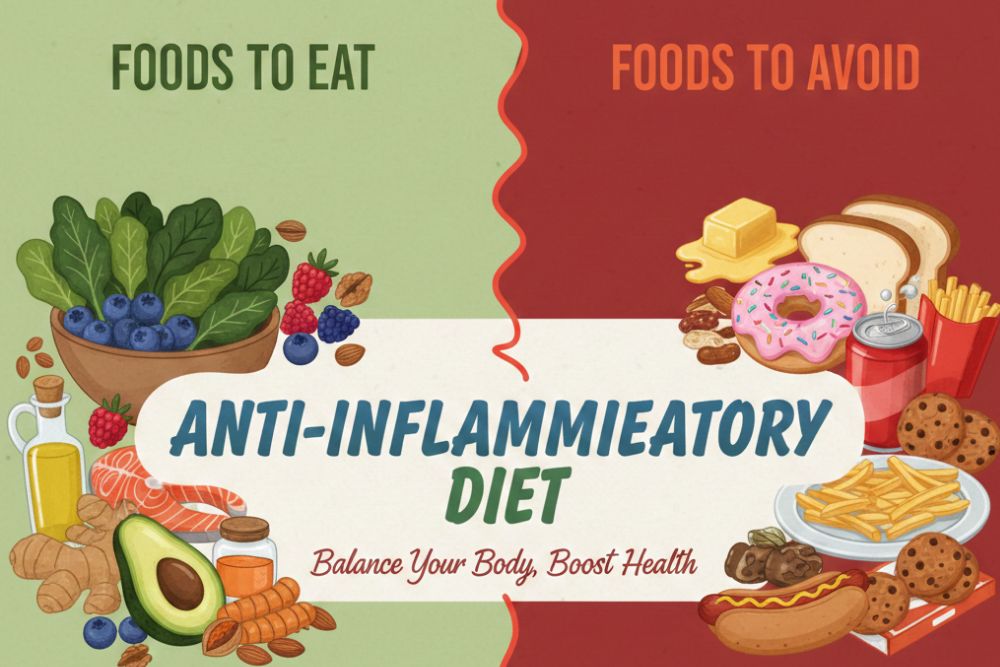
Maintain a Balanced Diet
Focus on nutrient-rich foods including:
- Fruits and vegetables
- Whole grains
- Lean proteins
- Iodine-rich foods in moderation
Exercise Regularly
Regular physical activity can help improve metabolism, energy levels, and overall health.
Manage Stress
Chronic stress may influence hormonal balance. Relaxation techniques, meditation, and adequate sleep can be beneficial.
Follow Regular Medical Checkups
Routine monitoring helps ensure thyroid hormone levels remain balanced.
Conclusion
Thyroid disorders are common health conditions that can affect metabolism, energy, mood, and overall wellness. Recognizing the symptoms, understanding the causes, and seeking timely treatment can help individuals manage thyroid conditions effectively. With proper medical care, healthy lifestyle habits, and regular monitoring, people with thyroid disorders can maintain a healthy and active life.
Understanding thyroid health is an important step toward better long-term well-being.